
The world of Grand Theft Auto modding is as vast as the games themselves, but few modifications have reached the legendary status of the Los Santos Police Department First Response, better known as LSPDFR. For those who are new to the scene, LSPDFR is a comprehensive total conversion mod for the PC version of Grand Theft Auto V that shifts the focus from the criminal underworld to the side of law enforcement. Instead of orchestrating heists or evading the law, players step into the boots of a police officer, patrolling the streets, responding to high-speed pursuits, and conducting detailed investigations.
The mod is developed by G17 Media and serves as the official successor to LCPDFR, which brought similar mechanics to Liberty City in Grand Theft Auto IV. Over the last decade, LSPDFR has evolved from a simple script into a massive ecosystem that supports hundreds of sub-plugins, custom vehicle models, and realistic uniform assets. It essentially transforms the base game into a dedicated police simulator, offering a level of depth that rivals standalone emergency service games. With a dedicated community and constant updates, it remains one of the primary reasons the Grand Theft Auto V modding community is still thriving today.
The Next Frontier: Speculating on Grand Theft Auto 6 Mods
As we look toward the horizon, the conversation has naturally shifted toward what we can expect from Grand Theft Auto VI. With Grand Theft Auto 6 Mods already becoming a top-tier search term, the anticipation for a next-generation version of the police mod is reaching a fever pitch. Given the advancements in the Rockstar Advanced Game Engine (RAGE) and the rumored setting of Vice City, the leap in quality for the next iteration of the plugin is expected to be monumental. Fans are theorizing that the improved NPC artificial intelligence and environmental density of Grand Theft Auto VI will allow for a far more immersive patrol experience than ever before.
One of the most likely features of the plugin for the new title will be a vastly expanded interaction system. In the current version of the mod, interacting with suspects often requires a series of menu-based commands, but the next generation could utilize the refined “interaction” prompts seen in Red Dead Redemption 2 to create seamless roadside questioning and de-escalation tactics. Furthermore, with the rumored focus on more realistic interior spaces in the new map, we could see the mod integrate full station house mechanics, where players must process paperwork, book suspects into cells, and manage evidence in a way that was previously limited by the engine of the previous game.
Dynamic Duty: Predictive Policing and Real-Time Dispatch
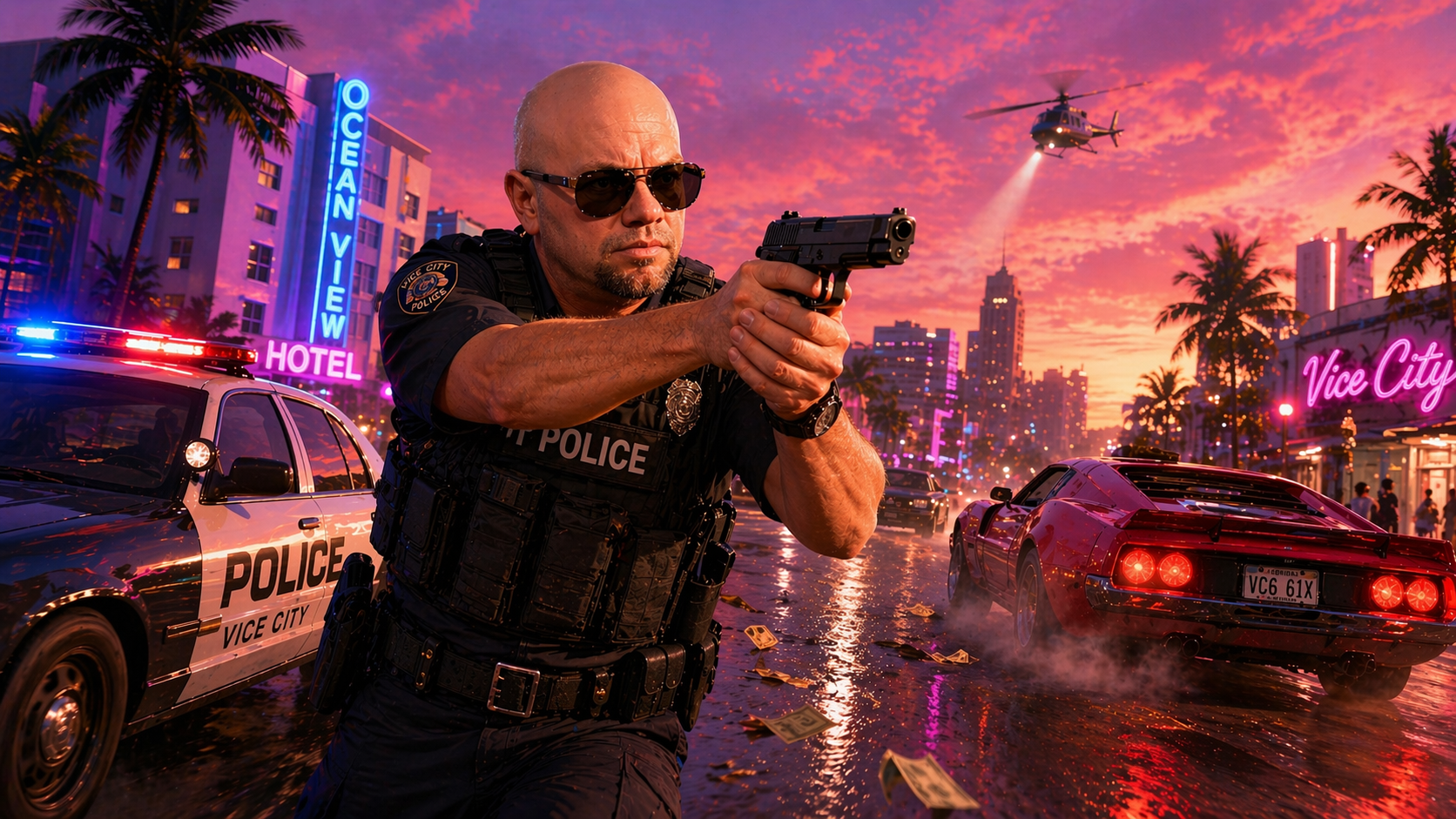 Speculation regarding the technical capabilities of the new engine also points toward a more advanced dispatch and backup system. In the current Los Santos version, calling for air support or additional units is a staple feature, but it often feels like a scripted event. For the next game, we expect a dynamic dispatch system that uses the enhanced world persistence to track units in real-time across the entire state of Leonida. This would mean that if you call for backup on a coastal highway, the responding units would have to navigate through the dense traffic and realistic intersections of the city, making the timing of your calls for service a critical part of the gameplay strategy.
Another feature that seems like a natural evolution is a revamped forensic and investigation system. The new title is expected to feature high-fidelity gore and environmental persistence, which the mod developers could leverage to create “Crime Scene” callouts. Imagine arriving at a scene where you have to secure a perimeter using realistic physical objects, photograph evidence that remains in the world, and use a database to match fingerprints or DNA. This shift from simple “catch and release” gameplay to a more procedural investigative approach would align perfectly with the more grounded and cinematic tone that Rockstar is reportedly aiming for with their latest release.
The Long Road to Leonida: Estimating Development Timelines
When discussing the timeline for these Grand Theft Auto 6 Mods, we have to look back at history to estimate how long the development might take. Grand Theft Auto V was released on PC in April 2015, and the first public version of LSPDFR followed shortly after in June 2015. This remarkably fast turnaround of roughly two months was only possible because the developers had years of experience with the RAGE engine from their work on LCPDFR. However, the move from Grand Theft Auto IV to V was a well-trodden path for the modding community, whereas the jump to the next generation will involve entirely new encryption methods and engine architecture.
The original LCPDFR mod for the fourth installment took considerably longer to reach a stable and feature-rich state, as the team had to essentially invent the framework for police roleplay from scratch. For the upcoming title, while the developers will have a clear vision of what they want to build, the complexity of the modern Rockstar engine means we should expect a longer wait. It is reasonable to speculate that while a basic “First Response” script might appear within the first three to six months of the PC release, a fully featured version with the depth of the current Los Santos plugin could easily take eighteen months to two years to perfect.
Cracking the Code: Security Hurdles and Technical Triumphs
The community’s patience will be tested, but the wait for a high-quality police mod in a next-generation Vice City will likely be worth it. The transition from the previous game to the new one will require the development of a new hook—the software that allows the mod to communicate with the game’s internal code. Since the Grand Theft Auto VI engine is expected to be more secure and complex, the G17 Media team and other modders will have to spend significant time reverse-engineering the game’s memory before they can even begin to implement police sirens or arrest mechanics. This foundational work is invisible to the average player but is the most time-consuming part of the process.
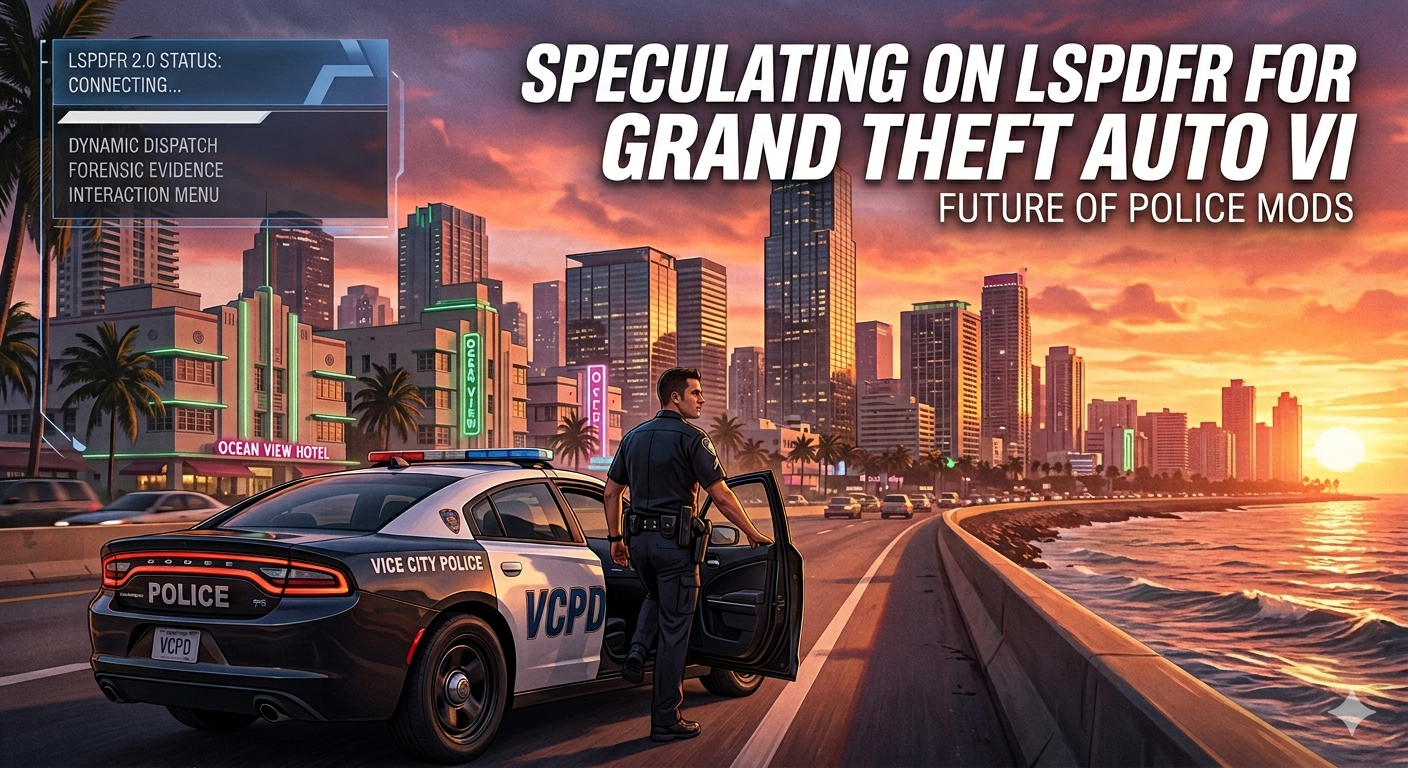
Despite the hurdles, the legacy of the LCPDFR and LSPDFR series proves that this team is capable of overcoming immense technical challenges. The move to a Florida-inspired setting offers fresh opportunities for unique gameplay, such as maritime patrols in the Everglades or high-speed chases down neon-lit boulevards. While we may be years away from seeing a “VCPDFR” or “Leonida First Response” in its final form, the foundation laid by the previous decade of modding ensures that the future of police simulation is in good hands. The evolution of Grand Theft Auto 6 Mods will surely be the most ambitious chapter yet in the history of the franchise.
A New Era of Enforcement: Final Thoughts on the Future of Roleplay
In conclusion, the shift from Los Santos to the vibrant streets of Vice City represents a new frontier for the modding world. The features we are theorizing about—from deep AI interactions to persistent world forensics—are no longer just dreams, but feasible realities given the power of the hardware the new game will run on. As the community moves from the era of the previous title into the unknown of the next, the spirit of roleplay and simulation remains stronger than ever. The developers have a massive task ahead of them, but if history is any indication, they will once again set the gold standard for what is possible in an open-world mod.
Ultimately, whether the development takes six months or two years, the impact on the longevity of the game cannot be overstated. Grand Theft Auto VI is poised to be a decade-defining title, and a robust police mod will ensure that players have a reason to keep coming back long after the credits roll on the main story. As we keep an eye on the latest news and trailer breakdowns, we can only hope that the modding tools become available sooner rather than later. Until then, the officers of Los Santos will continue their patrols, keeping the streets safe while they wait for their new orders in the South.


Responses